When parents consider orthodontic treatment for their child, their questions go beyond how the smile will look. Is this the right time? Will their child manage the aligners? Could further treatment be needed later?
Invisalign First for children is a clear aligner system designed for growing patients. It can be used during mixed dentition, when baby and permanent teeth are present together, to address certain developing dental and bite problems. Whether it is suitable requires an individual assessment.
At Clínica Dental La Campana in Nueva Andalucía, we explain five things worth discussing before making a decision.
1. Is Invisalign First for children suitable for your child’s needs?
The first step is to understand what your child’s teeth and bite need. Before choosing an appliance, the clinician must assess tooth positions, how the upper and lower teeth fit together, and the stage of dental development.
Invisalign First can be used for certain cases of crowding, spacing and bite irregularities. However, childhood orthodontic problems do not all require the same approach. Some may need a different appliance or a combination of treatments.
The examination and any necessary diagnostic records help establish whether treatment should begin now or whether continued monitoring is more appropriate.
An orthodontic assessment does not automatically mean your child needs to start treatment immediately.
2. What should this first phase achieve?
Before treatment begins, parents should understand which problem is being addressed and what the proposed treatment aims to achieve.
Invisalign First is used in first-phase orthodontic treatment while the teeth are still developing. Its features allow treatment to be planned around baby teeth and the eruption of permanent teeth. Further information is available on the official Invisalign First website.
A useful question to ask is: “What are we aiming to correct now, and what will need to be reassessed later?”
Early treatment does not guarantee that no further orthodontic treatment will be needed. Some children require a second phase once more permanent teeth have emerged, depending on their development and clinical needs.
3. How will aligners fit into home and school routines?
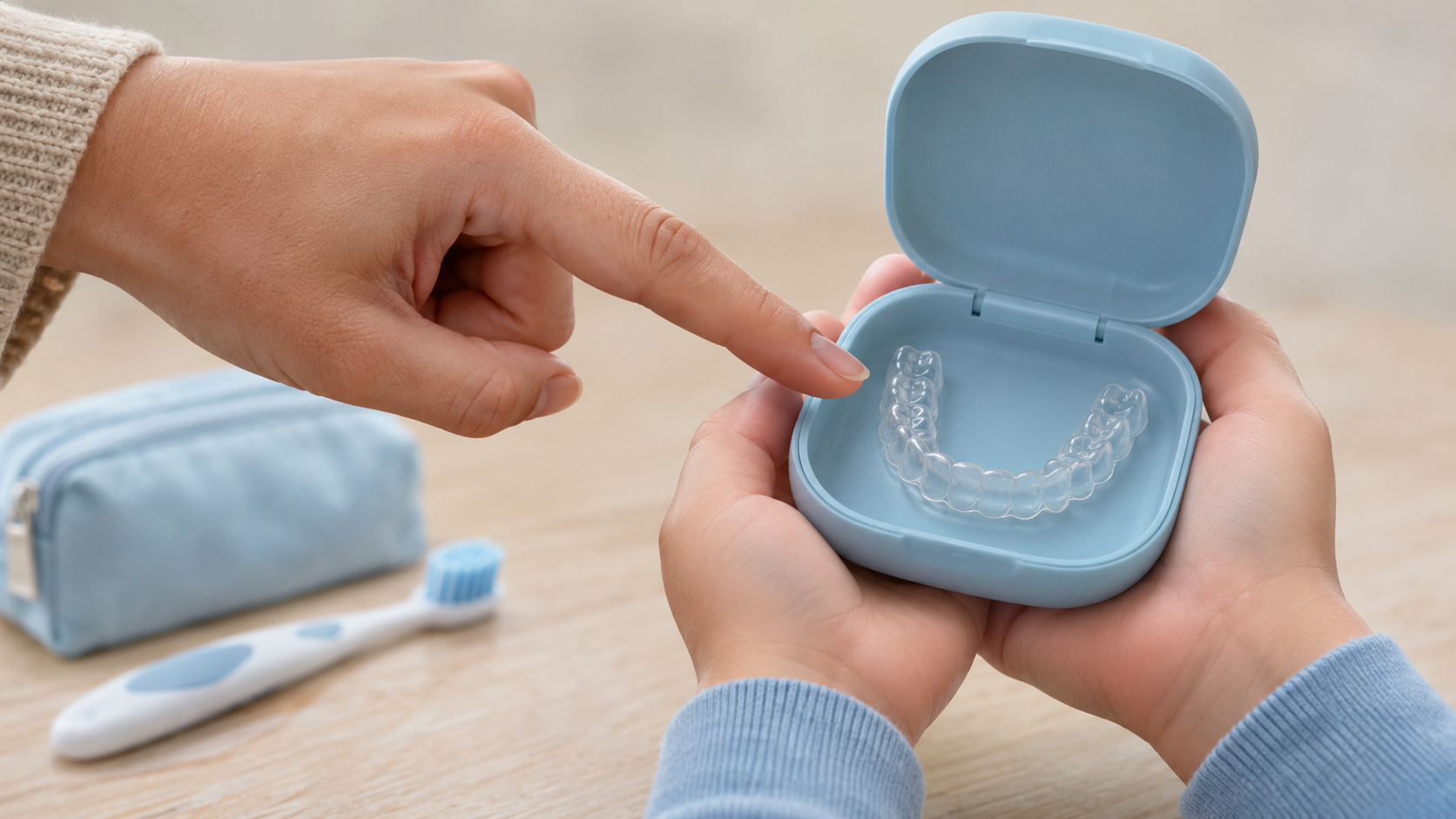
When considering Invisalign First for children, it helps to discuss what an ordinary treatment day will involve. The aligners are removable, and their use must follow the clinician’s instructions.
Parents and children need clear guidance on wearing, removing, cleaning and storing them. It is also worth thinking about who will help the child and how they will manage when away from home.
Before starting, discuss practical questions such as:
- How will your child manage the aligners at school mealtimes?
- Where will the storage case be kept?
- Will they need help putting the aligners in or taking them out?
- What instructions should other carers know?
- How will aligner care become part of the daily routine?
Talking through these situations helps everyone understand their role. Give your child time to practise handling the aligners and ask questions before expecting them to manage independently.
4. How will appointments and unexpected problems be managed?
Professional follow-up is part of orthodontic treatment. Reviews allow the clinician to assess progress and determine whether the plan needs adapting as the child develops.
Before starting, ask how appointments will be organised and how to contact the clinic if you have a concern.
It is also sensible to request instructions for situations such as a lost or damaged aligner, or a change in its fit. Having this information in writing makes it easier for parents and other carers to know what to do.
Our Invisalign treatment in Marbella page explains our general approach to personalised planning and professional follow-up at Clínica Dental La Campana.
5. What does the Invisalign First for children quotation include?
Understanding the scope of a quotation is essential when comparing treatment proposals. Ask which stage of treatment it covers and what is included.
Useful points to clarify include:
- The initial assessment and diagnostic records.
- The review appointments included in the plan.
- The arrangements for any additional aligners or adjustments.
- What happens if an aligner is lost or damaged.
- The follow-up planned after this phase.
- Any services that would be charged separately if required.
You can also ask how a possible need for later treatment would be explained and quoted. This gives you a clearer understanding of the proposed care and its financial terms.
Children’s orthodontic assessments in Nueva Andalucía
Choosing Invisalign First for children starts with understanding the individual child’s needs and what treatment would involve for the whole family.
At Clínica Dental La Campana, we can assess your child’s teeth and bite, answer your questions and explain whether orthodontic treatment or continued monitoring is appropriate.
You can find us at Calle Quevedo, 5, Portal 6, Nueva Andalucía, Marbella, close to San Pedro de Alcántara and Puerto Banús.
Call +34 951 55 66 44 or email info@clinicadentalacampana.com to arrange an appointment.